Back to guides
lead-generation-insights
January 28, 2026

B2B Lead Generation Report 2026

In January 2025, we released the first B2B Lead Generation Report, uncovering several defining trends across the B2B marketing landscape:

  • Email emerged as the most widely used lead generation channel, leveraged by 88% of B2B marketers, with social media close behind at 77%.
  • Among social platforms, LinkedIn led by a significant margin, adopted by 97% of respondents.
  • Nearly half of B2B marketers reported using LinkedIn daily
  • Close to one-third were already experimenting with LinkedIn automation - primarily for lead generation - though personalization continued to pose the biggest challenge.

One year on, and we have re-run the survey to understand how the B2B marketing landscape has evolved. Have key trends shifted? Are marketers still leaning heavily on email despite tightening deliverability standards? Have budgets diversified across new channels? And does LinkedIn continue to dominate B2B social strategy?

This 2026 edition draws on responses from 244 B2B marketers surveyed at the B2B Marketing Live event in London. Our goal: to assess how core strategies developed throughout 2025 and to identify the forces shaping B2B lead generation in 2026. 

This research highlights a clear shift in B2B lead generation toward digital, permission-based, and content-led channels, with LinkedIn firmly established as the backbone of modern B2B marketing.

Lead generation channels:

Email and social media remain the dominant channels, each used by over 85% of marketers, underscoring their role as core engines for outreach and engagement. PPC advertising shows the strongest growth (+11.29%), suggesting increased reliance on paid acquisition to offset declining organic reach, potentially driven by AI-generated search summaries.In contrast, cold calling has seen the steepest decline (−7.51%), signaling a move away from interruption-based outbound tactics.

Social media landscape:

LinkedIn is overwhelmingly the primary B2B social platform, with near-universal adoption. However, growth is accelerating on visual and video-first platforms such as Instagram and YouTube, alongside a resurgence in Facebook usage. This indicates that B2B marketers are expanding beyond LinkedIn-only strategies and increasingly embracing richer, more engaging content formats.

LinkedIn usage patterns:

LinkedIn is deeply embedded in B2B lead generation workflows, with nearly three-quarters of marketers using it at least weekly. Usage is shifting from daily activity toward a more deliberate weekly cadence, emphasizing quality, timing, and impact over volume.

LinkedIn automation:

Adoption of LinkedIn automation remains relatively modest and has slightly declined year-on-year. Where it is used, automation is primarily focused on lead generation, brand awareness, and driving website traffic, with growing interest in relationship nurturing. The main challenges have evolved from safety and outreach limits toward higher-level concerns around personalization and analytics, reflecting maturing use cases and expectations.

Key implications:

Overall, B2B marketing is moving toward hybrid strategies that blend paid acquisition, content distribution, and social engagement with selective use of automation. Marketers are prioritizing scalable reach and efficiency, while recognizing the need to preserve personalization and measure performance effectively. Those who successfully balance automation with human-led engagement—particularly on LinkedIn—are best positioned to capture attention, generate demand, and stay competitive in an increasingly crowded B2B landscape.

Survey results

1. What lead generation channels do you use?
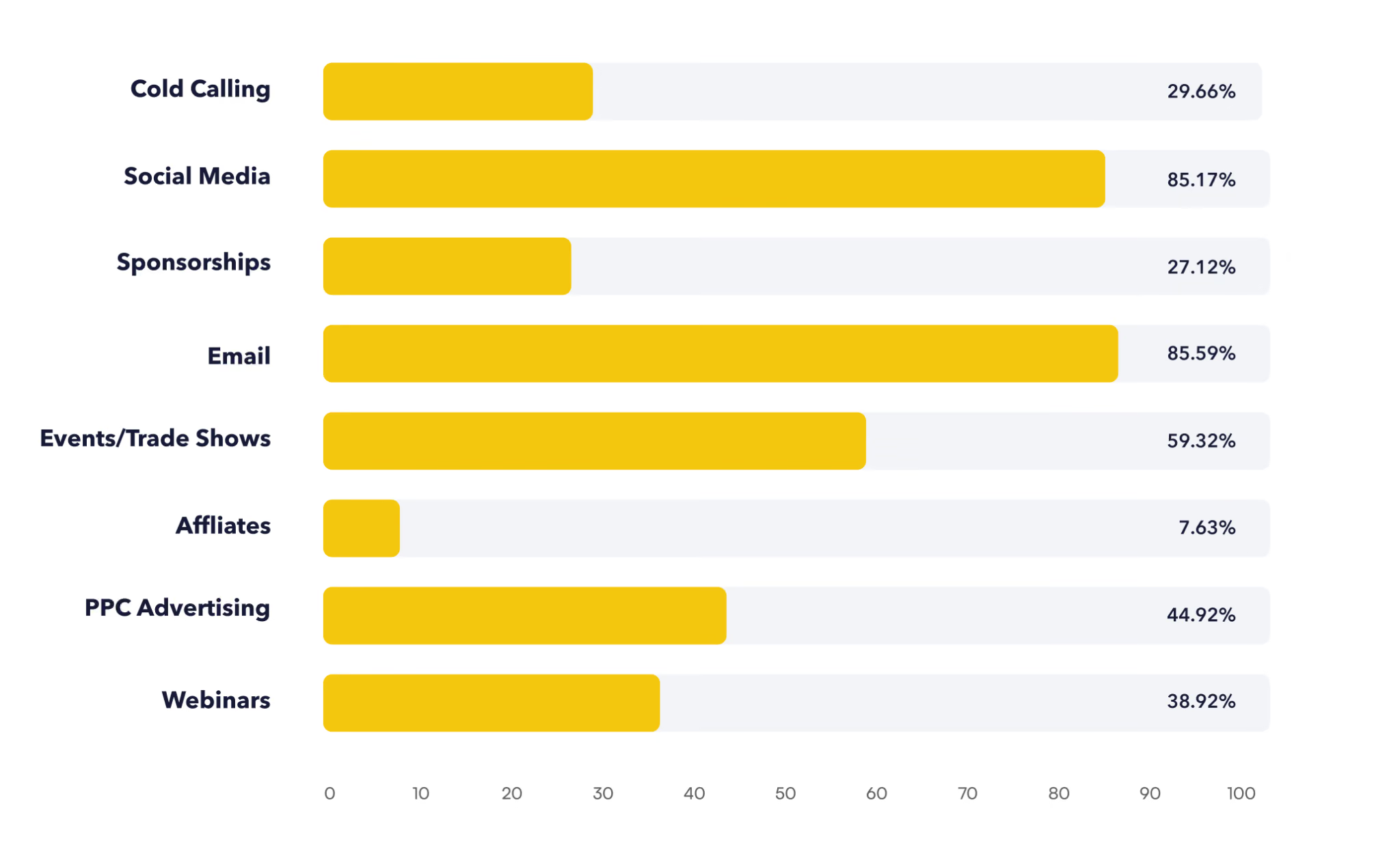
Analysis 

  • Top-performing channels:
    Email (85.59%)
    and Social Media (85.17%) are the standout leaders, showing robust adoption and perceived effectiveness. These are the primary engines of B2B outreach and engagement.

  • Strong mid-tier performers:
    Events/Trade Shows (59.32%)
    and PPC Advertising (44.92%) show solid traction. Events remain a powerful channel for relationship building, while PPC provides targeted lead-generation opportunities.

  • Moderate engagement channels:
    Webinars (38.98%)
    continue to play a role, likely driven by educational value and thought leadership potential, though not as widely used as digital outbound channels.
  • Lower-utilization channels:
    Cold Calling (29.66%)
    , Sponsorships (27.12%), and Affiliates (7.63%) show significantly lower uptake. These may be seen as either less effective or more resource-intensive relative to return.
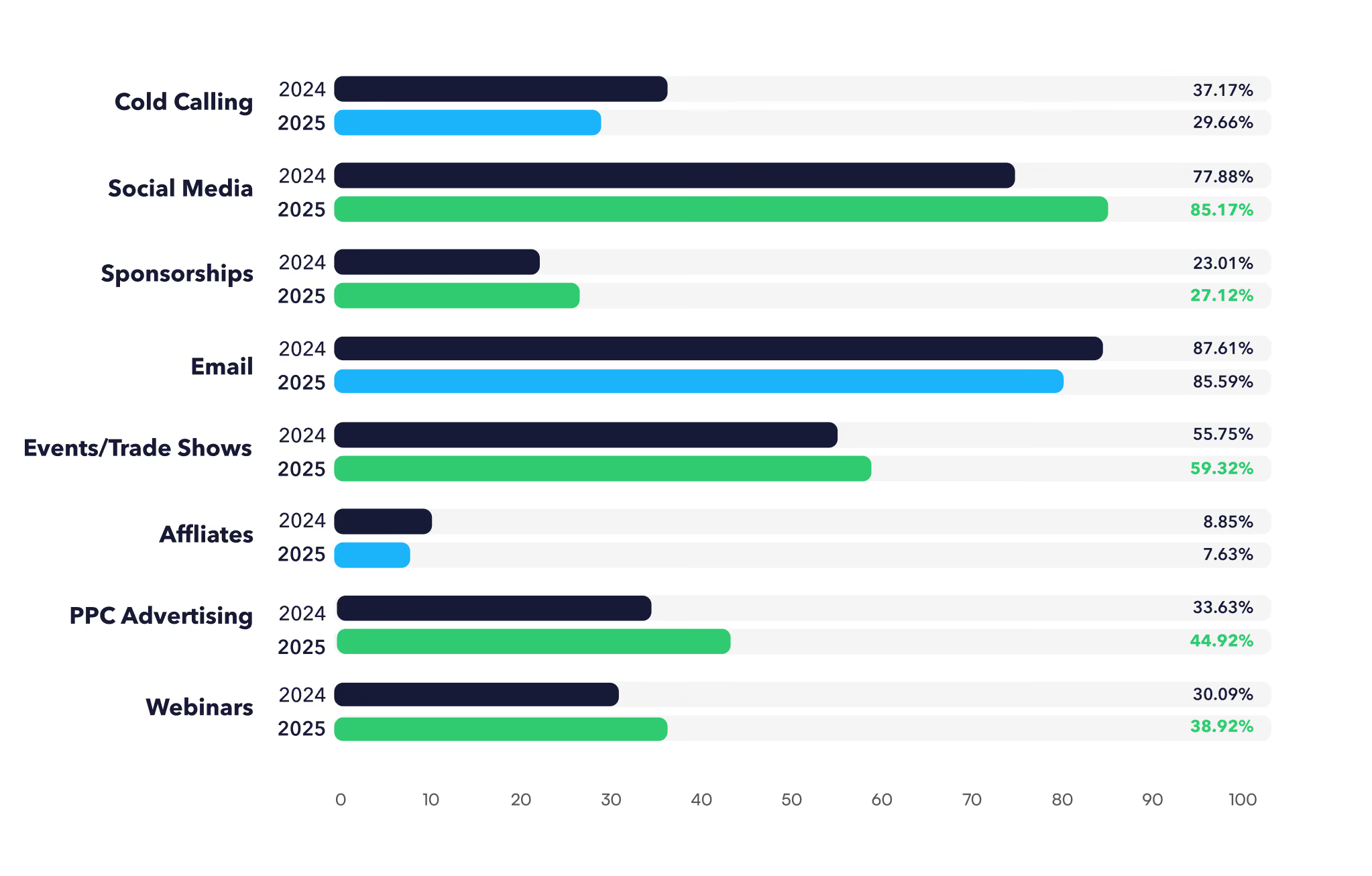
Biggest changes to channel adoption


  • PPC Advertising: 33.63% → 44.92% (+11.29%) - largest increase
  • Webinars: 30.09% → 38.98% (+8.89%)
  • Social Media: 77.88% → 85.17% (+7.29%)
  • Email: 87.61% → 85.59% (−2.02%)
  • Cold calling: 37.17% → 29.66% (−7.51%) - largest decrease

What it means for B2B marketers

The single biggest positive movement is PPC (+11.29%). This suggests marketers are allocating more budget to targeted paid acquisition rather than relying solely on organic or cold calling. The rise in PPC may be driven by the decline in search traffic following the introduction of AI-generated summaries. As a result, marketers could be turning to PPC to replace this lost website traffic. 

Cold calling is falling - a near 7.5% drop indicates decreasing reliance on cold outreach as a primary channel.

Rising interest in webinars and social media indicates that content and education-led demand generation are becoming more important.

Social media is now on a par with Email as a channel for B2B lead generation, and likely to exceed it for the first time in the near future. This is down to the advantages of LinkedIn in particular for lead gen. However, with email marketing being a central pillar to many companies’ marketing efforts, its ease of execution and minimal perceived investment make email hard for marketers to give up, even with diminishing returns.

Tactical recommendations

  1. The growing strength of events and PPC suggests that hybrid strategies - combining digital touchpoints with high-impact, in-person or targeted paid campaigns - deliver the best results. 
  2. Traditional outbound methods like cold calling and sponsorships are falling behind, indicating a shift toward permission-based, content-driven engagement over social rather than interruption-based tactics.
  3. Social outreach tools, including LinkedIn automation using Dux-Soup, can amplify your reach at a fraction of the cost of traditional channels.
  4. Rebalance the budget: test increasing PPC spend with tightly targeted ABM-style campaigns; measure CPL by audience.
  5. Amplify webinar programs with paid promotion (use PPC, social ads, and LinkedIn outreach to drive signups).
  6. Use email as the retention/nurture engine (still high usage) while pairing it with paid top-of-funnel activity.
  7. Reduce emphasis on cold calling unless it’s proven in a specific vertical; instead, combine outbound voice with warm inbound tech-touch campaigns.

2. What social media channels do you use?

Analysis

The data shows LinkedIn overwhelmingly dominates as the primary social media platform for B2B use, with 95.7% of respondents (223) indicating they use it, far surpassing every other channel.

Secondary platforms show much lower but notable adoption, with Instagram (34.8%), Facebook (30.0%), and YouTube (28.8%) forming a mid-tier group of usage. These channels likely support broader brand awareness and multimedia content needs.

Emerging or conversational platforms have limited adoption in the B2B space:

  • X: 14.2%
  • TikTok: 11.2%
  • WhatsApp: 8.2%
  • Bluesky: 1.3%

Overall, the results reinforce that LinkedIn remains the core B2B social channel, while other networks serve complementary but significantly smaller roles.

Biggest changes to social media platform adoption

  • Instagram: 21.05% → 34.76% (+13.71%) - largest increase
  • YouTube: 16.67% → 28.76% (+12.09%) 
  • Facebook: 21.93% → 30.04% (+8.11%)
  • LinkedIn: 97.37% → 95.71% (−1.66%) - largest decrease

What it means for B2B marketers

LinkedIn remains the core B2B channel.  With near-100% adoption, minor fluctuations are unlikely to threaten its dominance. What is more interesting is how people are using LinkedIn and harnessing its capabilities.

Visual and video platforms are surging. Instagram (+13.71%) and YouTube (+12.09%) are seeing the fastest growth, reflecting the increasing value of storytelling and educational content in B2B marketing.

Emerging platforms (TikTok, Bluesky, X) are gaining modest traction, signaling experimentation and a potential future diversification of B2B social strategies.

Facebook’s resurgence (+8.11%) indicates that platforms previously considered less strategic for B2B can still offer opportunities when integrated thoughtfully. Facebook’s me too product strategy, copying elements of Instagram and Tiktok could be working to broaden its appeal.

Overall trend: B2B marketers are broadening their social strategies beyond just LinkedIn, increasingly embracing visual and video-first channels to engage audiences in more dynamic and creative ways.

Tactical recommendations

  1. While LinkedIn remains the cornerstone of B2B marketing, rapid adoption growth on Instagram and YouTube, along with the resurgence of Facebook, signals that visual and video content are becoming more popular for engaging professional audiences. 
  2. Marketers should continue to capitalise on LinkedIn’s potential for B2B lead generation, seeking new engagement strategies - exploring the use of direct outreach with the use of LinkedIn automation tools to scale, alongside traditional organic posting.
  3. At the same time, emerging platforms like TikTok, Bluesky, and X offer low-risk opportunities to experiment with new formats and capture the attention of early adopters. 
  4. A multi-channel, content-diverse strategy is now emerging in order to stay competitive in B2B social media.

3. How often do you use LinkedIn for lead generation?

Analysis

The results indicate that LinkedIn is a key tool for lead generation among B2B marketers, with the majority using it on a regular basis. 

Specifically, 41.7% of respondents use LinkedIn daily for lead generation, highlighting its role as a consistent, primary channel for engaging prospects. 

An additional 32.8% use it weekly, suggesting a strong ongoing engagement rhythm for outreach and content distribution. Usage drops for less frequent engagement, with 13.2% using it monthly and 8.9% using it rarely, while only 3.4% of marketers report not using LinkedIn at all for lead generation.

Overall, the data shows that nearly three-quarters of B2B marketers (74.5%) engage with LinkedIn at least weekly, emphasizing its centrality in lead generation strategies and reinforcing its status as the most relied-upon social platform in the B2B space.

Biggest changes to LinkedIn usage frequency

  • Weekly: 22.03% → 32.77% (+10.74%) - largest increase
  • Monthly: 11.02% → 13.19% (+2.17%)
  • Daily: 48.31% → 41.70% (−6.61%) - largest decrease

What it means for B2B marketers

B2B social media usage is moving away from daily engagement (−6.61%) toward a weekly cadence (+10.74%), while occasional and non-users are declining. 

This indicates that audiences are checking social media less frequently but remain highly engaged overall, highlighting the importance for marketers to focus on high-value, strategically timed weekly content rather than expecting daily interactions.

Tactical recommendations

  1. Prioritize quality over quantity: With fewer daily users, focus on delivering high-value, impactful content that captures attention in limited weekly interactions. When automating outreach campaigns, don’t send messages too frequently - for fear of pushing prospects out of the buying cycle. 
  2. Optimize posting cadence: Concentrate efforts on weekly touchpoints, aligning content with peak engagement days and times to maximize visibility.
  3. Leverage content planning: Use a mix of thought leadership, case studies, and educational content to make each weekly post meaningful and shareable.
  4. Invest in evergreen and reusable content: Since users engage less frequently, repurpose high-value content across multiple weeks to maintain reach.
  5. Track engagement trends: Monitor which posts or outreach campaigns perform best on a weekly cadence and adjust strategy to reinforce top-performing formats and topics. Tools like the Dux-Dash, when using LinkedIn automation, can help identify top-performing trends.

4. Do you currently use LinkedIn automation tools for lead generation?

Analysis

Yes - 27.23%: A minority of users leverage LinkedIn automation, indicating some adoption but not widespread reliance.

No - 62.13%: The majority of users avoid LinkedIn automation, suggesting lack of awareness of the benefits, skepticism, or preference for manual engagement.

Not sure - 10.64%: A small portion is uncertain about automation usage, reflecting either a lack of awareness or unclear internal practices.

Biggest changes to LinkedIn automation usage

  • No: 55.17% → 62.13% (+6.96 pts) - largest increase
  • Not sure: 15.52% → 10.64% (−4.88 pts)
  • Yes: 29.31% → 27.23% (−2.08 pts) - largest decrease

What it means for B2B marketers

The slight decline in affirmative responses and slight incline in negative responses indicates that LinkedIn automation adoption has remained relatively stagnant over the past 12 months, or marginally decreased. 

We have seen is a proliferation of tools claiming to offer LinkedIn automation services, which in reality require complex third-party integration tools and processes to make them work. This can make the solution expensive, time-consuming and challenging to fit into existing business processes.

The rise in inefficient LinkedIn automation practices and a lack of LinkedIn knowledge has left some users failing in their attempts to generate ROI from LinkedIn automation tools. Agencies that invest time in optimizing tools and processes are on the rise, generating big ROI from LinkedIn automation tools. This is where we expect to see the adoption rates increase - the ‘done for you’ LinkedIn lead generation agencies.

Tactical recommendations

  1. LinkedIn automation has historically been managed by sales teams for lead generation, with marketing adoption remaining relatively limited. However, marketing teams can leverage these tools to amplify content, drive webinar registrations, and cost-effectively boost top-of-funnel engagement. 
  2. While adoption of LinkedIn automation is still modest in the UK market, automation presents a timely opportunity to improve efficiency and extend reach. Marketers should capitalise on it before it becomes too mainstream.

5. What are your primary objectives for LinkedIn automation for your business?

Analysis

Lead generation dominates: Automation is primarily seen as a tool for acquiring new leads rather than managing existing relationships.

There is a large top-of-funnel focus, with high usage for brand awareness and website traffic - showing that marketers leverage automation mainly to increase reach and visibility.


Relationship management is secondary: Fewer respondents use automation to nurture current connections, indicating a continued preference for personalized engagement in this area.

Only a small minority find it not applicable, signaling that LinkedIn automation has broad relevance among users who adopt it.

Biggest changes in LinkedIn automation objectives

  • Drive traffic to company website: 46.09% → 59.40% (+13.31%) - largest increase
  • Build brand awareness: 53.91% → 66.24% (+12.33%)
  • Nurture existing relationships: 27.83% → 38.46% (+10.63%)

What it means for B2B marketers

Overall, LinkedIn automation is broadening beyond pure lead generation. Marketers are increasingly using it for content distribution, brand awareness, and relationship nurturing, signaling a trend toward more strategic, top-of-funnel, and engagement-focused applications rather than just prospect acquisition.

Tactical Recommendations

  1. Leverage automation for content and traffic: Focus on distributing blogs, case studies, and thought leadership to drive website visits and brand awareness.
  2. Enhance relationship nurturing: Use drip campaigns and personalized follow-ups to strengthen connections with existing prospects and clients.
  3. Maintain lead generation efficiency: Optimize automated lead capture and follow-up sequences to ensure high-quality prospect engagement.
  4. Balance automation with human touch: Combine automation with personalized outreach for high-value leads to preserve relationship quality.

6. Have you faced any of these challenges when using LinkedIn automation for lead generation?

The primary challenge for B2B marketers using LinkedIn automation is ensuring personalization (49%), emphasizing the need to maintain authentic, human-led engagement.

Other notable challenges include access to analytics (29%) and managing daily outreach limits (26%), reflecting operational and measurement constraints. 

Only a minority of people report no challenges or issues with platform safety, suggesting that while automation is widely adopted, marketers must carefully balance efficiency with personalization and performance tracking.

Biggest changes in LinkedIn automation challenges

  • Ensuring personalisation: 36.04% → 48.64% (+12.60%) - largest increase
  • Access to analytics: 18.92% → 29.09% (+10.17%)
  • Staying safe on LinkedIn: 13.51% → 5.45% (−8.06%)
  • Managing daily outreach limits: 35.14% → 26.36% (−8.78%) - largest decrease

What it means for B2B marketers

Over the past 12 months, the focus of challenges has shifted from operational constraints (outreach limits, safety) to strategic and measurement issues (personalization and analytics). 

This indicates that marketers are moving beyond basic usage of LinkedIn automation and now face higher-level challenges around effectiveness, engagement quality, and performance tracking.


Tactical recommendations

  1. Prioritize personalization: With ensuring personalization now the top challenge, marketers should craft dynamic, customized messaging and segment audiences to maintain humanized engagement while using automation.
  2. Choose a tool with analytics and tracking: The rise in difficulty accessing analytics highlights the need for robust reporting tools to monitor campaign performance, optimize sequences, and measure ROI effectively.
  3. Leverage automation efficiently: Many tools manage your safety and daily outreach limits for you, so ensure that one with a strong safety track record is chosen to stay within LinkedIn limits without compromising scale.
  4. Balance automation with manual touchpoints: To address strategic challenges and ensure high-quality engagement, combine automation for repetitive tasks with manual follow-ups to convert leads effectively.

Conclusion & Key Takeaways

The last 12 months seen a gradual evolution in marketing trends, rather than disruptive change. 

The speed of uptake of new technologies is slower than expected, which could be a natural cycle given the explosion of new technologies over the past decade. Rather than new adoption, more providers are competing for the same user base, while users are looking more at improving existing strategies with the latest AI capabilities.

  1. Email and Social Media Lead the Way
    Email (85.6%) and Social Media (85.2%) remain the most widely used and effective lead generation channels, anchoring most B2B marketing strategies. The growth of social media is likely driven by increasingly common positive-ROI use cases, reinforcing its value as a core channel in B2B marketing.

  2. Rise of Paid & Content-Driven Channels
    PPC advertising (+11.3%) and webinars (+8.9%) are the fastest-growing channels, reflecting a shift toward targeted, measurable campaigns and educational content. Traditional cold calling (−7.5%) and sponsorships are declining, signalling a move toward permission-based, content-led outreach.

  3. LinkedIn Dominates Social Media
    LinkedIn remains the core B2B platform (95.7%), with nearly three-quarters of marketers engaging at least weekly. While daily engagement has dipped slightly, weekly interaction is rising, highlighting the importance of high-value, strategically timed content.

  4. Visual & Video Content Growing
    Instagram (+13.7%) and YouTube (+12.1%) adoption is accelerating, with Facebook (+8.1%) also rebounding. B2B marketers are increasingly embracing multi-channel strategies and video-first content to engage audiences dynamically.

  5. LinkedIn Automation Usage Is Moderate but Strategic
    Only 27.2% of marketers currently use automation tools, with adoption largely steady. Automation is increasingly used for lead generation, brand awareness, website traffic, and relationship nurturing, reflecting a more strategic, top-of-funnel focus.

  6. Key Challenges: Personalization & Analytics
    Ensuring personalized outreach (49%) and accessing robust analytics (29%) are the main challenges for automation users. Operational issues like daily outreach limits and platform safety are less of a concern, indicating growing maturity in automation practices.

  7. Strategic Implications for 2026

    • Hybrid approaches combining paid campaigns, events, social media, and email deliver the best results.

    • Content-led, permission-based engagement is replacing interruption-driven tactics.

    • LinkedIn automation tools, like Dux-Soup, can cost-effectively scale outreach while supporting top-of-funnel engagement.

    • Weekly, high-value content should be prioritized over daily posting.

    • Experimentation on emerging and visual platforms (TikTok, Bluesky, Instagram, YouTube) can diversify reach and engagement.

Final thought: 

B2B marketers who integrate targeted paid campaigns, content-led social strategies, and automation with a human touch will be best positioned to capture leads, nurture relationships, and drive measurable growth in 2026.

Read more

Premium content is available to our Learning Hub members. Subscribe for free to access the full article.

Already a User? Sign in and refresh the page

Get started with Dux-Soup

Handle your entire sales pipeline, track your performances, and in the end, close more deals.

Non User Discovery

From its targeting capabilities to message open and conversion rates, discover why LinkedIn is the superior lead generation platform.

Non User Discovery

From its targeting capabilities to message open and conversion rates, discover why LinkedIn is the superior lead generation platform.

From its targeting capabilities to message open and conversion rates, discover why LinkedIn is the superior lead generation platform.

Non User Discovery

From its targeting capabilities to message open and conversion rates, discover why LinkedIn is the superior lead generation platform.

Non User Discovery
Non User Research

Our top 6 ways to use LinkedIn automation to grow your sales pipeline and win more clients.

A 4-step strategy from Dux-Soup user on how to maximize your LinkedIn campaign success.

Discover the tools and strategies used to fill an IT company's diary to the brim with sales appointments