


Derek Little is the founder and CEO of Trailblazer Mastery, who specialise in helping companies turn expertise into credibility that buyers trust - before the first conversation.
He has developed a repeatable framework that addresses one of the most common yet fixable problems in B2B outreach: the ‘Authority Gap’.
In a practical hands on webinar session, Derek walked attendees through his Authority Gap framework. This is a practical model for understanding why some firms generate real opportunities on LinkedIn while others create a lot of activity that simply doesn’t convert to real outcomes.
The difference isn't the tools, the answer lies in the signals you are sending. This understanding allows him to;
Step in before pipeline friction becomes pipeline instability.
Read on for the key takeaways, or watch the webinar on demand to hear Derek walk you through it himself. Note: the replay has a downloadable workbook which you can find at the top of the resource section of the session, that can be filled in as you go, leaving you with a clear strategy to fulfill your goals.
The Authority Gap: same tools, different results
Derek opened with a comparison that most LinkedIn users will recognize.
He'd worked with two clients using identical tools, similar levels of effort and the same LinkedIn outreach platform. But the outcomes couldn't have been more different.
Company A generated more activity. More connections, more surface-level replies, more posts. On paper, it looked like momentum but meaningful opportunities were scarce.
Company B did less overall in terms of activity. But buyers understood them faster, conversations were more substantive and qualified leads came in consistently.
The lesson here is not to let activity fool you. The right question to ask isn’t "how much am I doing?" It’s much more valuable to ask “are buyers moving closer?"
The LinkedIn shift you can’t afford to ignore
What makes generating results on LinkedIn harder is a fundamental change to how LinkedIn itself works.
In 2025, LinkedIn shifted its algorithm from reach to relevance. The old rules of the game had been in place for years: you need to post more, connect more send more. But this has quietly been replaced by a new one which is all about being relevant to the right people.
Let’s face it, you can't control the algorithm, the market noise or what your competition is doing. But you can control your positioning, your clarity and the signals you're sending.
As Derek put it:
The goal isn't more reach, it's more trust. If you adapt, you'll build trust faster. If you don't, you'll keep creating activity without creating enough conversations.
Being seen isn’t good enough any more
Most firms still treat LinkedIn as a visibility challenge. But the real problem is buyer confidence.
Imagine a buyer landing on your profile, reading a few posts, maybe visiting your website and then moving on without a second thought.
What they were really trying to establish was: do you understand my world? Are you credible? Are you relevant to me, i.e. do you have the right products and services?
If your signals don't answer those questions quickly enough, prospects disengage, most likely because you made them work too hard to find the information signals rather than lack of interest.
Being seen gets attention but being trusted is what creates conversations.
What buyers are concluding
There is a simple but powerful 4 step model that Derek introduces:
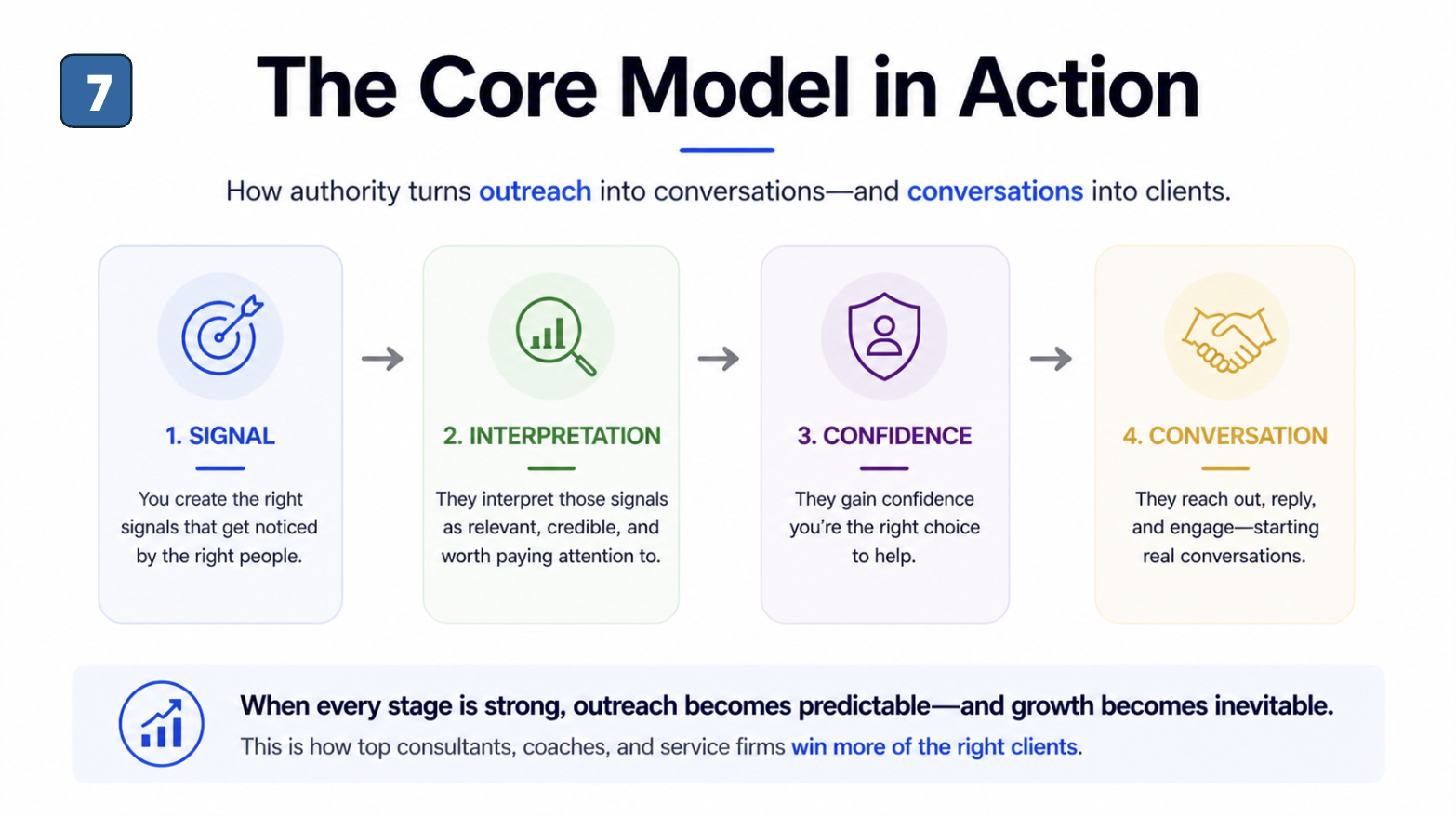
The problem almost always sits at the interpretation stage. Every touchpoint you have with a prospect such as your profile, your content, your outreach messages, your website, etc sends a signal.
Here’s the key point - buyers don't respond to the signal itself. They respond to what they can conclude from it.
An example brings this to life. Look at these two statements:
- “We offer digital transformation consulting” - it’s generic, forgettable and does nothing to create confidence.
- “We help operations teams fix the bottlenecks that cause digital transformation projects to stall after kick off” - it’s specific, credible and immediately relevant.
The second version gets to the point because it names a real problem, signals expertise and connects directly to something a buyer is likely already worried about. As Derek put it:
The question isn't just what you'resending, it’s what buyers are concluding.
The four Authority Signals that build buyer confidence
So how do you shape those all-important conclusions? Derek's framework centres on four signals:
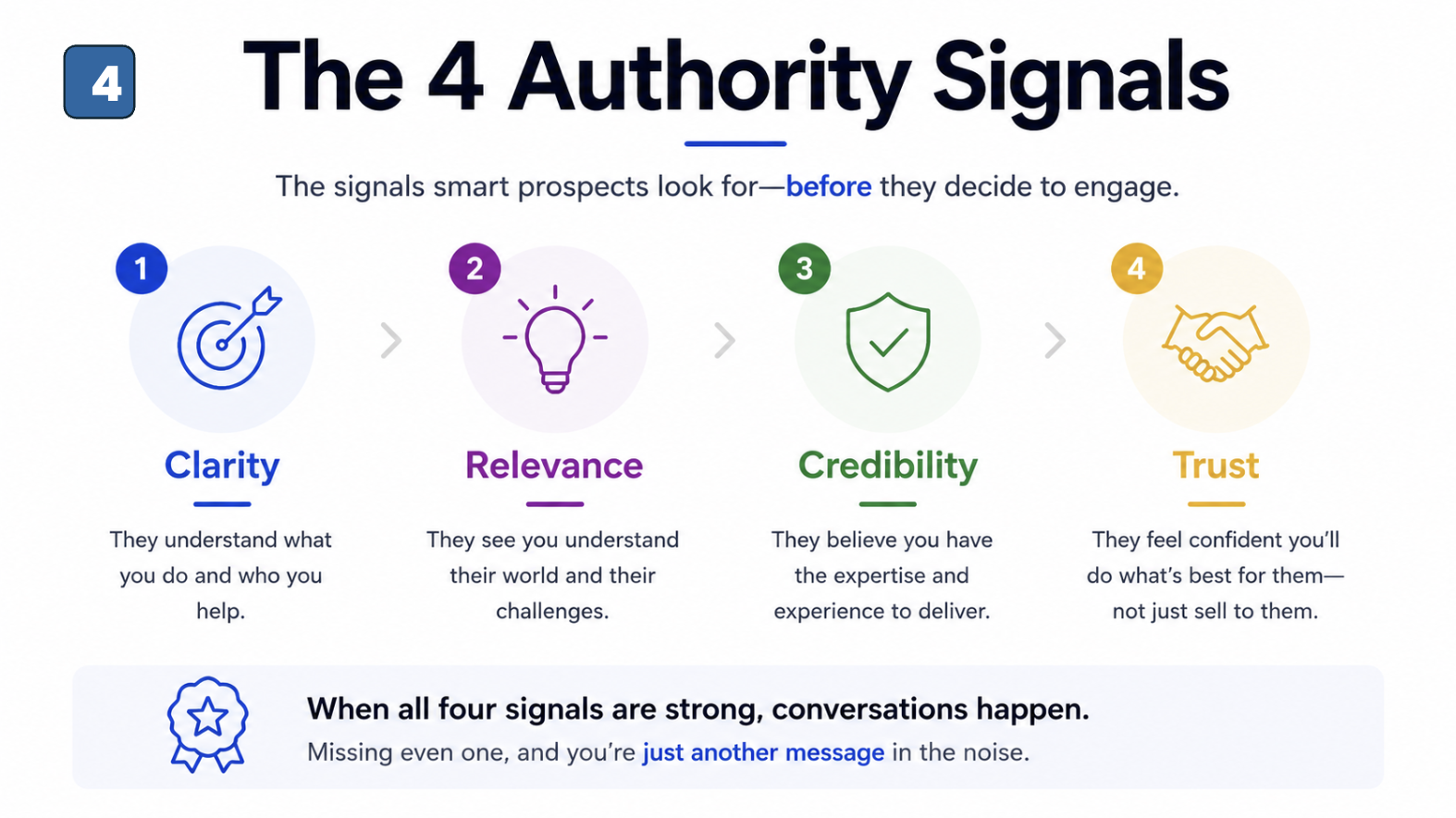
1. Clarity: Buyers should be able to immediately understand what you do. If they have to read three posts and visit your website before they get it, you're making them work way too hard.
2. Relevance: Your content and positioning should connect to the problems buyers are actively dealing with. This is vital – it’s not about your services, you must talk to their problems.
3. Credibility: Evidence matters. Here you want to have examples, outcomes, documented case studies and specific insights. They all signal that you know what you're talking about.
4. Trust: This is the cumulative result of the other three Authority Signals. When clarity, relevance and credibility are all present and consistent, buyers reach the point where they'd feel comfortable having a conversation with you.
Derek illustrated this with a client profile example. A cybersecurity lawyer whose original LinkedIn profile was professional but generic. It could have applied to almost any lawyer.
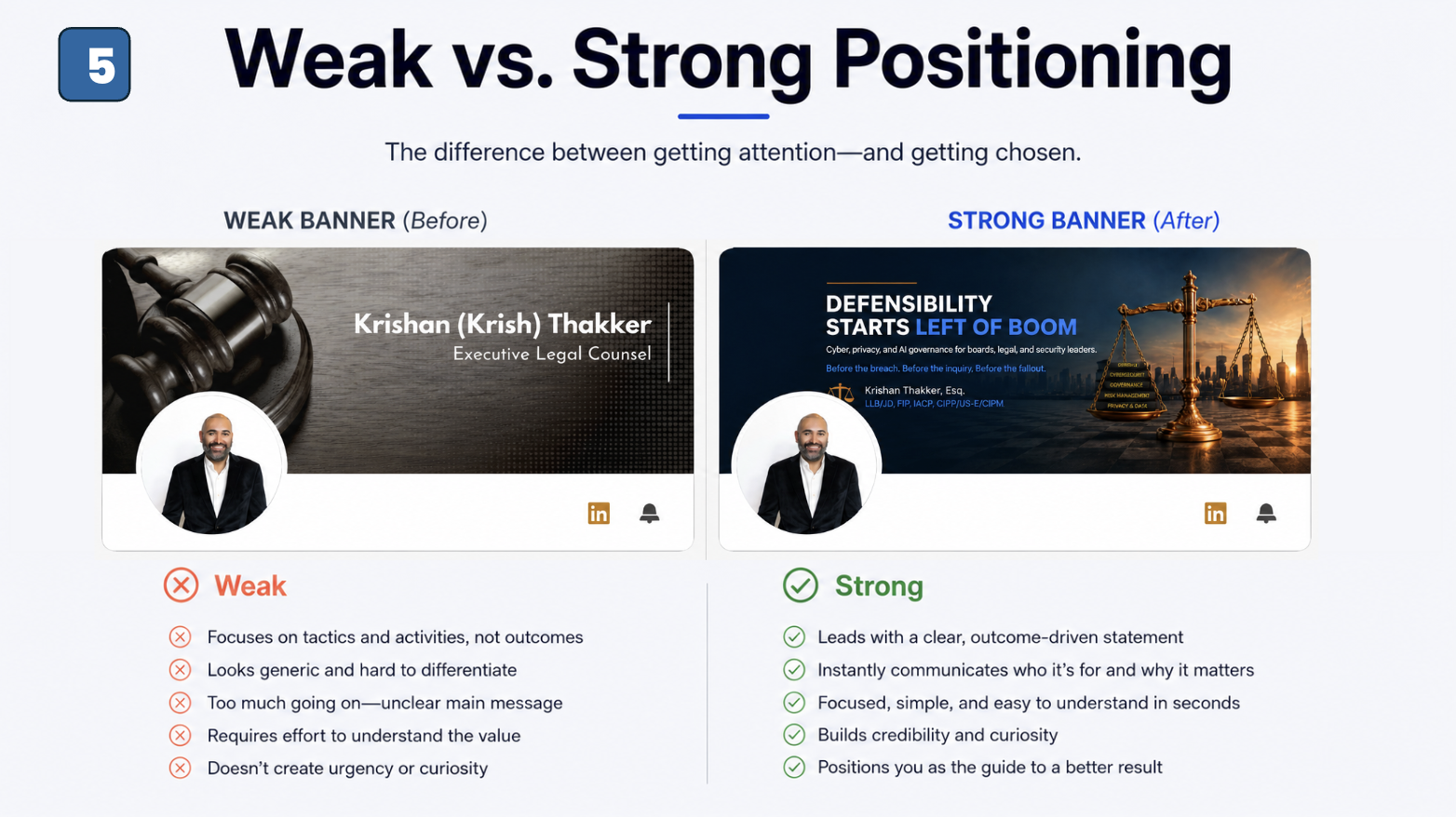
The revised version used language like “cyber risk, legal defensibility, board-level risk”. Using terminology that is immediately recognizable to anyone in the sector, instantly positions him as the right person to call.
Weak positioning makes buyers work too hard. Strong positioning is specific, buyer-focused, and problem-aware.
Building trust through repeated signals
One of the most important ideas Derek shared is that trust isn't a single event. It's the cumulative result of repeated, consistent signals over time.
The journey looks like this:
- You earn attention by saying something relevant.
- You create relevance by helping buyers see themselves in the problem you describe.
- You prove credibility through examples, insights and evidence.
- You improve timing by connecting your message to something buyers feel urgency around right now.
- By this point, you've built enough trust that they're ready to have a real conversation with you.
This is exactly where a LinkedIn newsletter becomes a powerful tool. Derek described how, for Company B, he set up a structured follow-up series and newsletter that consistently delivered value to new connections.
Replies shifted from silence to “that's interesting, I'm looking forward to the next one.” That response is the signal that trust is building.
Outreach needs a solid foundation to be in place
This is the insight that ties everything together, and where Dux-Soup comes in.
Derek noted that outreach doesn't fail only because buyers don't see you. It fails when what they see doesn't build the confidence that we’ve been discussing.
You can run the most precisely targeted Dux-Soup campaign in the world, but if your profile is generic, your content is about your services rather than your buyer's problems, and your follow-up sequence doesn't add value, you're effectively building on sand.
The firms that get the best results from LinkedIn automation are the ones that do the positioning work first. When your authority signals are in place, every connection request you send, every follow-up message in your sequence, and every piece of content lands differently.
Buyers stop perceiving your messages as individual outreach components and start connecting the dots between your message and everything they've already seen from you.
That's when outreach gets traction and you see response rates improve. It's the essential step in ensuring your outreach delivers on its potential. And that relies on Dux-Soup’s automation, to run structured follow-up sequences, nurture connections over time, and keep campaigns flowing consistently.
As Derek put it: "Better outreach starts before the message is sent."
Five actionable takeaways
Derek closed with five principles worth pinning up next to your screen:
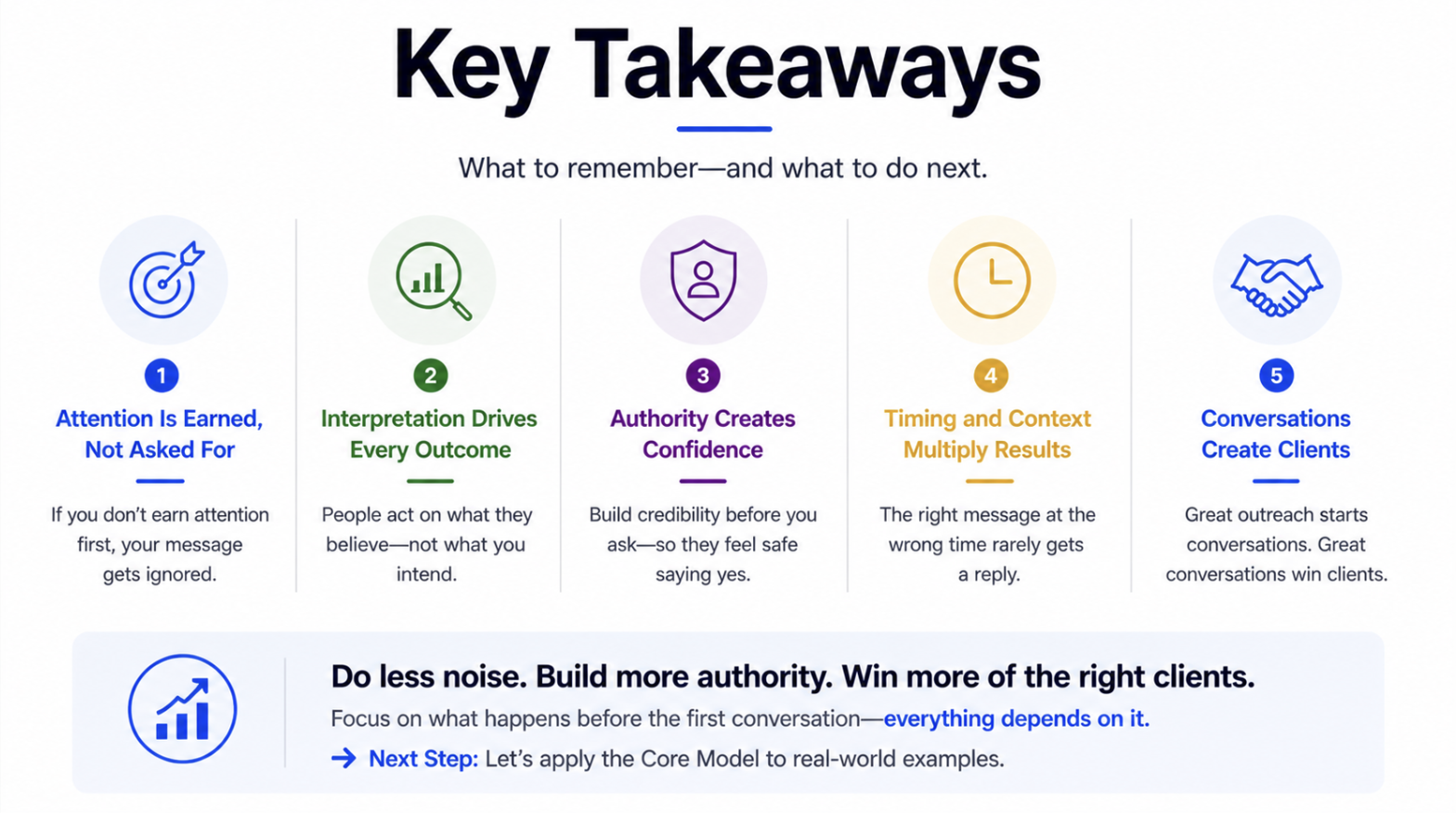
- Attention: Getting seen is only the beginning.
- Interpretation: Buyers decide what your signals mean. It's not just what you're sending, it's what they're concluding.
- Authority: When you have it, buyers feel more comfortable engaging.
- Timing: You become more relevant when buyers see why this matters now.
- Conversations: They only happen when confidence is high enough.
And his final piece of advice is absolutely key:
More activity is not the win. More confident buyers is the win.
Start building your authority signals - now
Derek provides a diagnostic quiz that identifies your two quickest wins and your core narrative priority.
And if you're ready to put the right outreach engine behind your authority signals, start your free Dux-Soup trial and see what happens when great positioning meets consistent, automated LinkedIn outreach.


