B2B Lead Generation Report 2026
In January 2025, we released the first B2B Lead Generation Report, uncovering several defining trends across the B2B marketing landscape:
- Email emerged as the most widely used lead generation channel, leveraged by 88% of B2B marketers, with social media close behind at 77%.
- Among social platforms, LinkedIn led by a significant margin, adopted by 97% of respondents.
- Nearly half of B2B marketers reported using LinkedIn daily
- Close to one-third were already experimenting with LinkedIn automation - primarily for lead generation - though personalization continued to pose the biggest challenge.
One year on, and we have re-run the survey to understand how the B2B marketing landscape has evolved. Have key trends shifted? Are marketers still leaning heavily on email despite tightening deliverability standards? Have budgets diversified across new channels? And does LinkedIn continue to dominate B2B social strategy?
This 2026 edition draws on responses from 244 B2B marketers surveyed at the B2B Marketing Live event in London. Our goal: to assess how core strategies developed throughout 2025 and to identify the forces shaping B2B lead generation in 2026.
This research highlights a clear shift in B2B lead generation toward digital, permission-based, and content-led channels, with LinkedIn firmly established as the backbone of modern B2B marketing.
Lead generation channels:
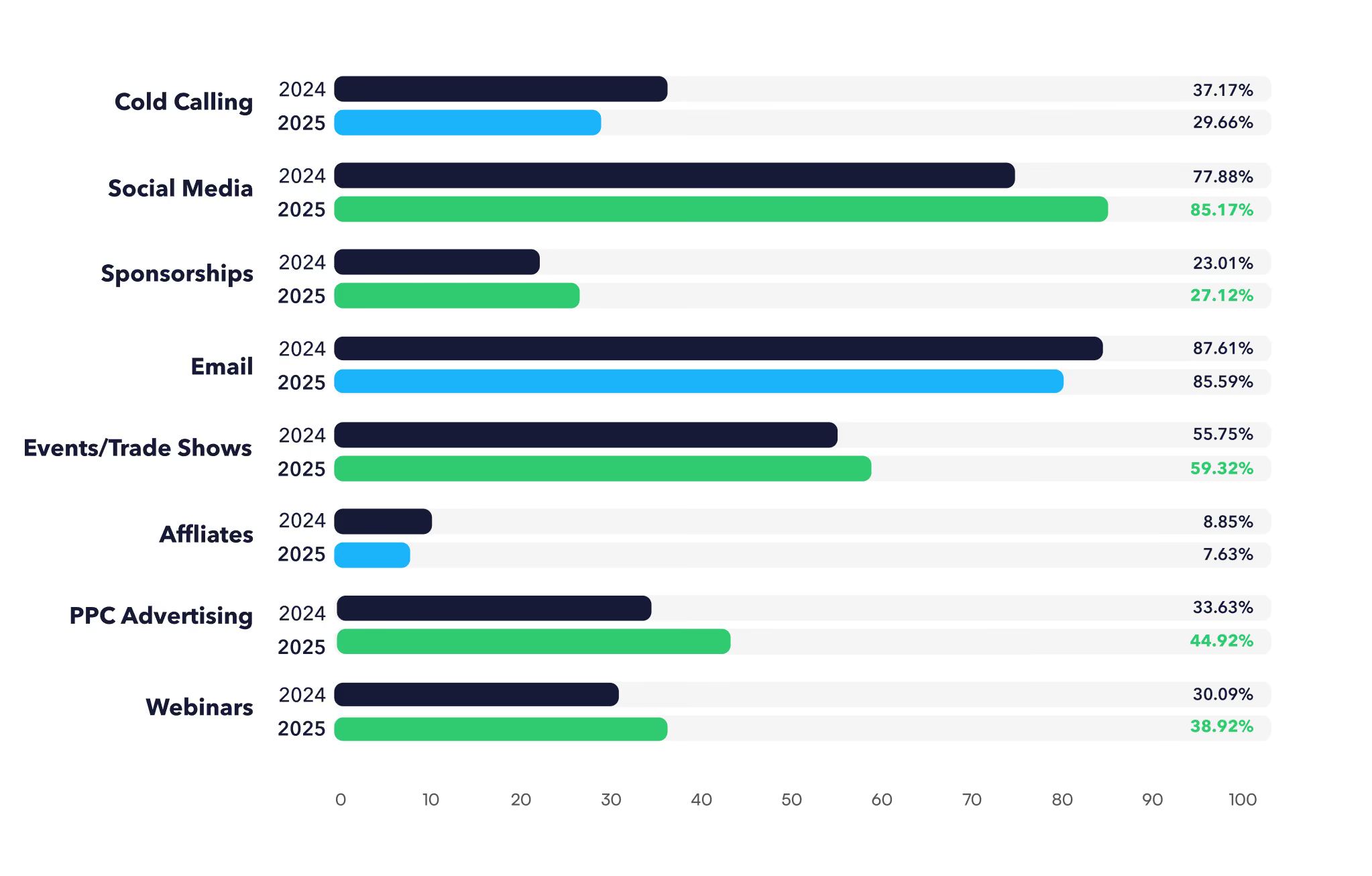
Email and social media remain the dominant channels, each used by over 85% of marketers, underscoring their role as core engines for outreach and engagement. PPC advertising shows the strongest growth (+11.29%), suggesting increased reliance on paid acquisition to offset declining organic reach, potentially driven by AI-generated search summaries.In contrast, cold calling has seen the steepest decline (−7.51%), signaling a move away from interruption-based outbound tactics.
Social media landscape:
LinkedIn is overwhelmingly the primary B2B social platform, with near-universal adoption. However, growth is accelerating on visual and video-first platforms such as Instagram and YouTube, alongside a resurgence in Facebook usage. This indicates that B2B marketers are expanding beyond LinkedIn-only strategies and increasingly embracing richer, more engaging content formats.
LinkedIn usage patterns:
LinkedIn is deeply embedded in B2B lead generation workflows, with nearly three-quarters of marketers using it at least weekly. Usage is shifting from daily activity toward a more deliberate weekly cadence, emphasizing quality, timing, and impact over volume.
LinkedIn automation:
Adoption of LinkedIn automation remains relatively modest and has slightly declined year-on-year. Where it is used, automation is primarily focused on lead generation, brand awareness, and driving website traffic, with growing interest in relationship nurturing. The main challenges have evolved from safety and outreach limits toward higher-level concerns around personalization and analytics, reflecting maturing use cases and expectations.
Key implications:
Overall, B2B marketing is moving toward hybrid strategies that blend paid acquisition, content distribution, and social engagement with selective use of automation. Marketers are prioritizing scalable reach and efficiency, while recognizing the need to preserve personalization and measure performance effectively. Those who successfully balance automation with human-led engagement—particularly on LinkedIn—are best positioned to capture attention, generate demand, and stay competitive in an increasingly crowded B2B landscape.
Survey results
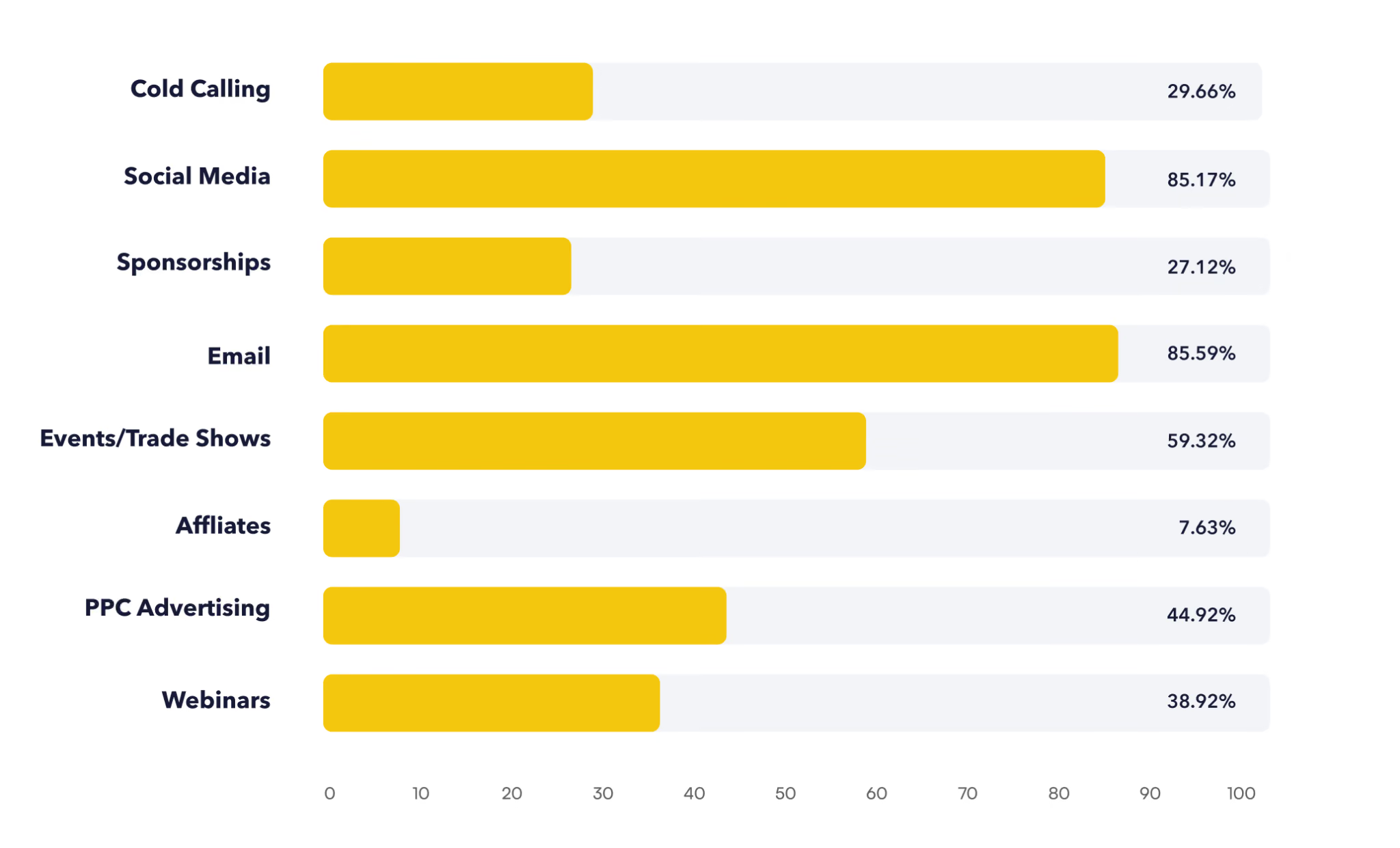
1. What lead generation channels do you use?
Analysis
- Top-performing channels:
Email (85.59%) and Social Media (85.17%) are the standout leaders, showing robust adoption and perceived effectiveness. These are the primary engines of B2B outreach and engagement. - Strong mid-tier performers:
Events/Trade Shows (59.32%) and PPC Advertising (44.92%) show solid traction. Events remain a powerful channel for relationship building, while PPC provides targeted lead-generation opportunities. - Moderate engagement channels:
Webinars (38.98%) continue to play a role, likely driven by educational value and thought leadership potential, though not as widely used as digital outbound channels.
- Lower-utilization channels:
Cold Calling (29.66%), Sponsorships (27.12%), and Affiliates (7.63%) show significantly lower uptake. These may be seen as either less effective or more resource-intensive relative to return.
Biggest changes to channel adoption